
Sevilla
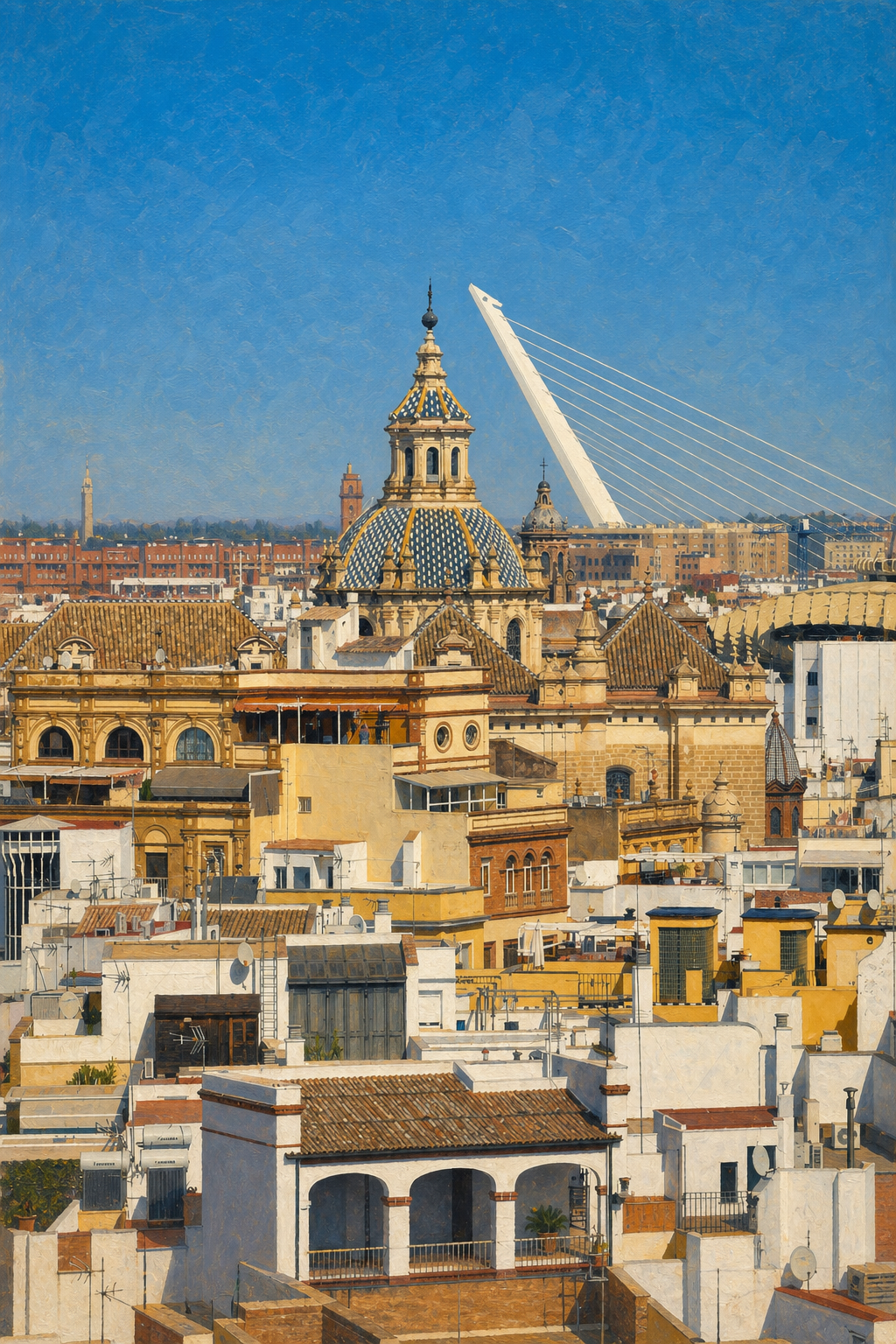
Why choose Sevilla?
- Who it fits best: Solo
- Best time to go: Spring
- Ideal stay: 2-4 nights
- Weather: High impact
- Walking: Part of the experience
Sevilla at a glance
A quick read on how well this destination fits different kinds of trips.
Who it fits
- Solo
- Couple
- Friends
- With kids
Best time to go
- Autumn
- Winter
- Spring
- Summer
How long to stay
- 2-4 nights
- 5-8 nights
- 9-14 nights
Sevilla insights
Takeaways from real traveler experience in Sevilla.
- Weather
- High impact
- Walking
- Part of the experience
- Upscale options
- Many
- Variety
- Broad
- Social atmosphere
- Strong
Discover more destinations
More from the same country, or something with a similar character.
Other destinations in Spain
Discover more about Sevilla
Practical and interesting facts about the destination.
Sevilla has materially different experience families within the city: monumental and religious heritage, museums, historic neighborhoods, flamenco, food markets and tapas, riverfront settings, contemporary architecture, gardens and large urban parks. The official tourism map divides the city into ten visitor-relevant areas, including Triana, Macarena, Cartuja, Nervión, Santa Cruz, El Arenal and the 1929 exhibition district.
Calm is available but spatially and temporally mixed. María Luisa contains shaded avenues, ponds, fountains, small glories and restorative garden settings; Plaza del Cabildo is specifically described by the tourism authority as peaceful.
Sevilla has strong public social-life infrastructure: tapas bars, cafés, terraces, traditional markets, plazas, neighborhood commerce, flamenco venues, theatres, festivals and riverfront gathering spaces.
Sevilla supports low-cost participation through walking-based sightseeing, public parks, markets, traditional tapas and a substantial range of museums and historic sites. The tourism authority describes markets as everyday-life spaces and documents multiple traditional food markets, including Triana, Encarnación, Feria and Arenal.
Sevilla is relatively legible for a fixed-base urban visit: major monuments, museums, neighborhoods, parks, markets and transport connections are concentrated within a connected city network. TUSSAM’s official map shows visitor stops at Santa Justa, Plaza de Armas, Cathedral/Giralda, Alcázar, Plaza de España, María Luisa, Triana, museums and major districts.
Crowd pressure is spatially uneven rather than necessarily uniform across the city. The official tourism map identifies ten neighborhoods, while specific descriptions distinguish busy central areas such as Alfalfa–Encarnación and El Arenal from parks, Triana, Cartuja, San Jerónimo, Nervión and other districts.
Sevilla has a substantial premium hospitality layer in and near the historic center. Hotel Alfonso XIII is a five-star Luxury Collection property beside the Cathedral and Alcázar; Mercer Sevilla presents itself as a luxury hotel with intimate dining and Michelin Key 2025 recognition.
Sevilla has visible daytime and nighttime public energy through plazas, markets, tapas bars, terraces, neighborhood life, performances, festivals and cultural venues. The official tourism authority describes the city’s food-and-going-out culture as spanning historic markets, taverns, gastrobars, sunset drinks and neighborhood routes.
Based on real traveler preferences (Stravl data)
Looking for something else?
554 destinations across 44 countries. Search by name or filter to browse.
Click a country to see its destinations
Want to find your own destination?
Take the quiz and see which destinations fit your mood right now.