
Valencia
Why choose Valencia?
- Who it fits best: Couple
- Best time to go: Summer
- Ideal stay: 2-4 nights
- Surroundings: Worth exploring
- Variety: Broad
Valencia at a glance
A quick read on how well this destination fits different kinds of trips.
Who it fits
- Solo
- Couple
- Friends
- With kids
Best time to go
- Autumn
- Winter
- Spring
- Summer
How long to stay
- 2-4 nights
- 5-8 nights
- 9-14 nights
Valencia insights
Takeaways from real traveler experience in Valencia.
- Surroundings
- Worth exploring
- Variety
- Broad
- Social atmosphere
- Strong
- Planning effort
- Low
- Pace
- Lively
Discover more destinations
More from the same country, or something with a similar character.
Other destinations in Spain
Discover more about Valencia
Practical and interesting facts about the destination.
Valencia offers several materially different experience families within a normal city stay: Roman, Islamic, medieval and modern architecture; more than 30 museums; Central Market and neighborhood markets; Turia Garden; urban and natural beaches; Marina and maritime districts; paella and rice culture; and Albufera wetlands, rice fields, dunes, pine woods, boat trips and birdwatching. This is broader than a single historic-center sightseeing circuit.
Calm is realistically available but spatially selective. Turia Garden, Parc de Cabecera, outer beach stretches, Albufera wetlands, dunes, pinewoods and some residential areas provide restorative settings, while the historic core, major markets, nightlife streets, Marina terraces and festival routes can be lively or noisy.
Valencia has visible public social life through plazas, terraces, markets, beaches, Marina spaces, neighborhood restaurants, cafés, student areas, nightlife and street festivals. Official municipal material describes a calendar of celebrations largely held in the street and involving collective participation.
The destination has a real budget layer: free or low-cost public-space experiences include Turia Garden, beaches, neighborhood walking, outdoor historic streets and some free museum periods; the Tourist Card lists €15, €20 and €25 online prices for 24-, 48- and 72-hour adult versions and includes municipal museums, public transport, a tapa and discounts.
Arrival and basic navigation are relatively legible: Valencia Airport is about 8 km from the city, metro lines 3 and 5 run approximately every 15–20 minutes, the trip takes about 20 minutes, and bus line 150 also connects airport and city.
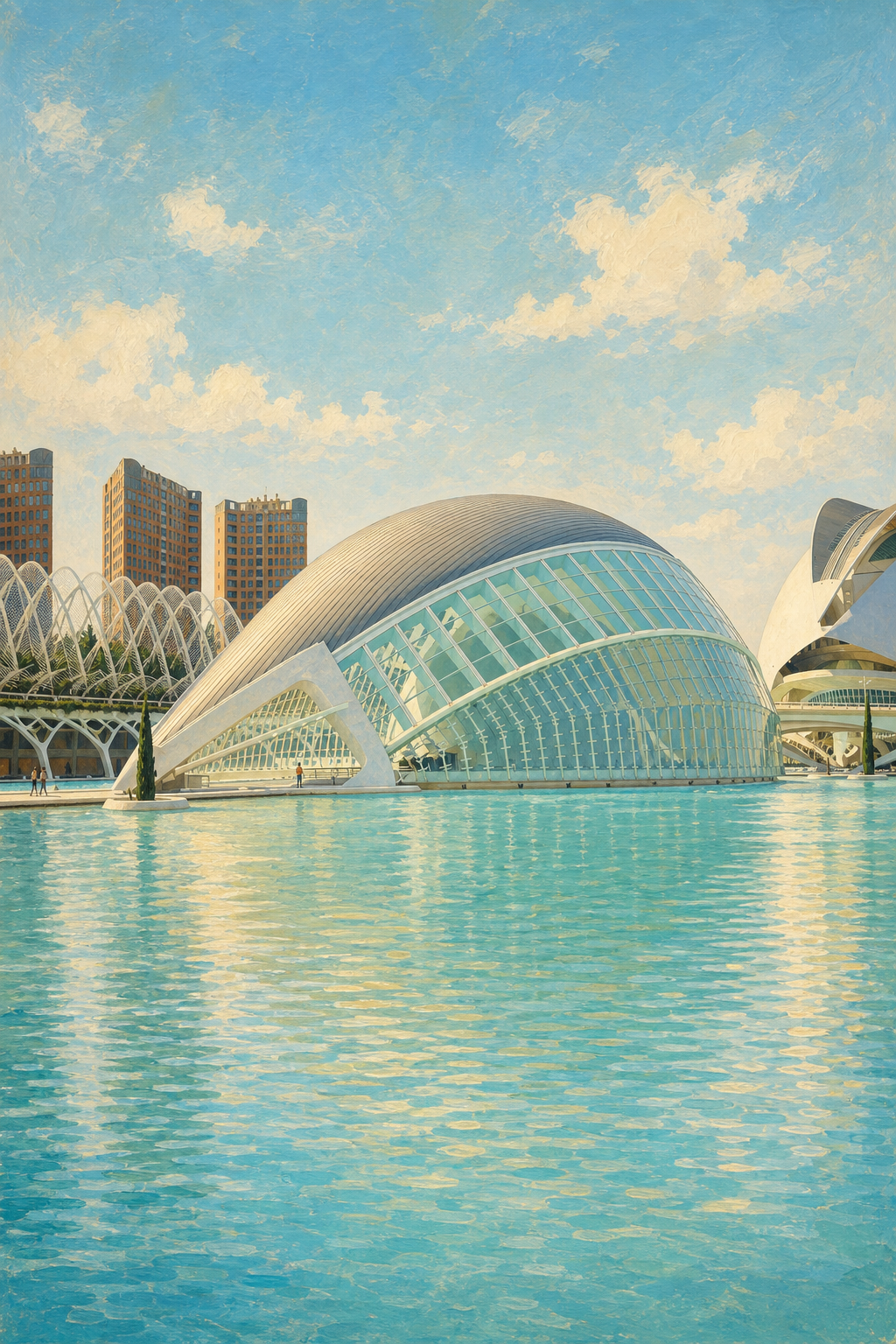
Crowd pressure is spatially uneven rather than uniformly pervasive. The most exposed areas are likely to be the historic core, Central Market, City of Arts and Sciences, main urban beaches, Marina terraces and major festival routes; lower-contact alternatives include Turia sections, Parc de Cabecera, outer beach stretches, Albufera natural beaches, dunes, pinewoods and selected residential neighborhoods. This is an inference from the documented spatial distribution of attractions and open spaces, not a direct crowd count.
Valencia has a credible premium hospitality layer. Official tourism reporting identifies three Michelin Key hotels: Caro Hotel, Only You Hotel Valencia and Helen Berger Boutique Hotel; the descriptions include five-star properties, historic architecture, design, rooftop or outdoor spaces, gym facilities, upgraded rooms, restaurants and service quality.
Valencia has multiple sources of daytime and nighttime energy: busy markets and plazas, café and terrace culture, Marina and beach activity, student and nightlife areas, concerts, museums, sports, festivals and street celebrations. Official tourism material specifically identifies nightlife scenes in the old town, seaside and student areas.
Based on real traveler preferences (Stravl data)
Looking for something else?
554 destinations across 44 countries. Search by name or filter to browse.
Click a country to see its destinations
Want to find your own destination?
Take the quiz and see which destinations fit your mood right now.