
Summer · editorial guide
Wild Crete
By The Tripsenti Team
Nature in Crete isn't just the backdrop to the trip. The mountains, the gorges, the springs, the caves, and the vegetation connect to one another and explain why the island holds such different landscapes within such short distances. In some spots you can read hundreds of millions of years of history in the rock. In others, you can see species that survive only here, or populations reduced to a handful of places in Europe.
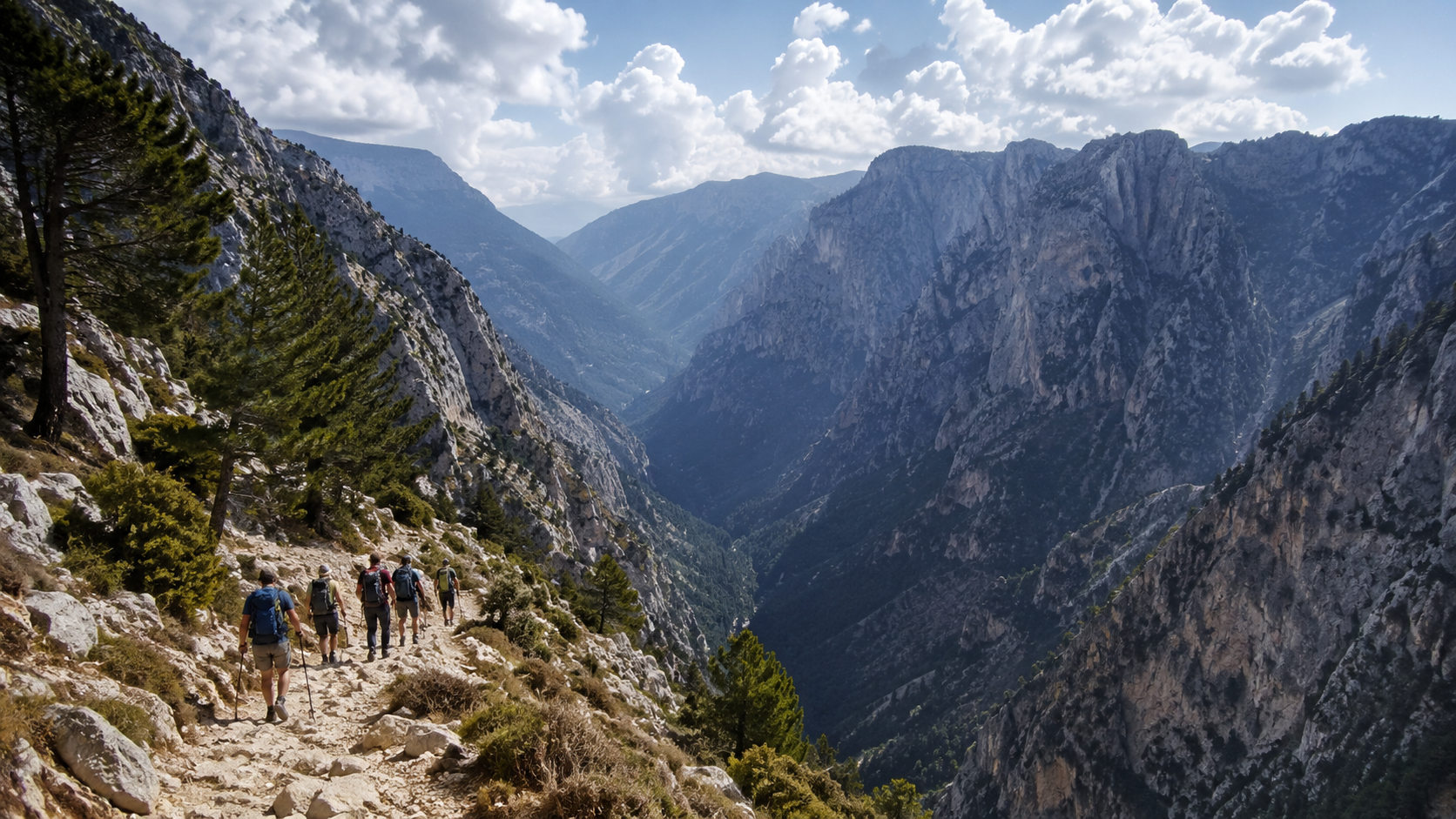
Chania — The White Mountains as a refuge for life
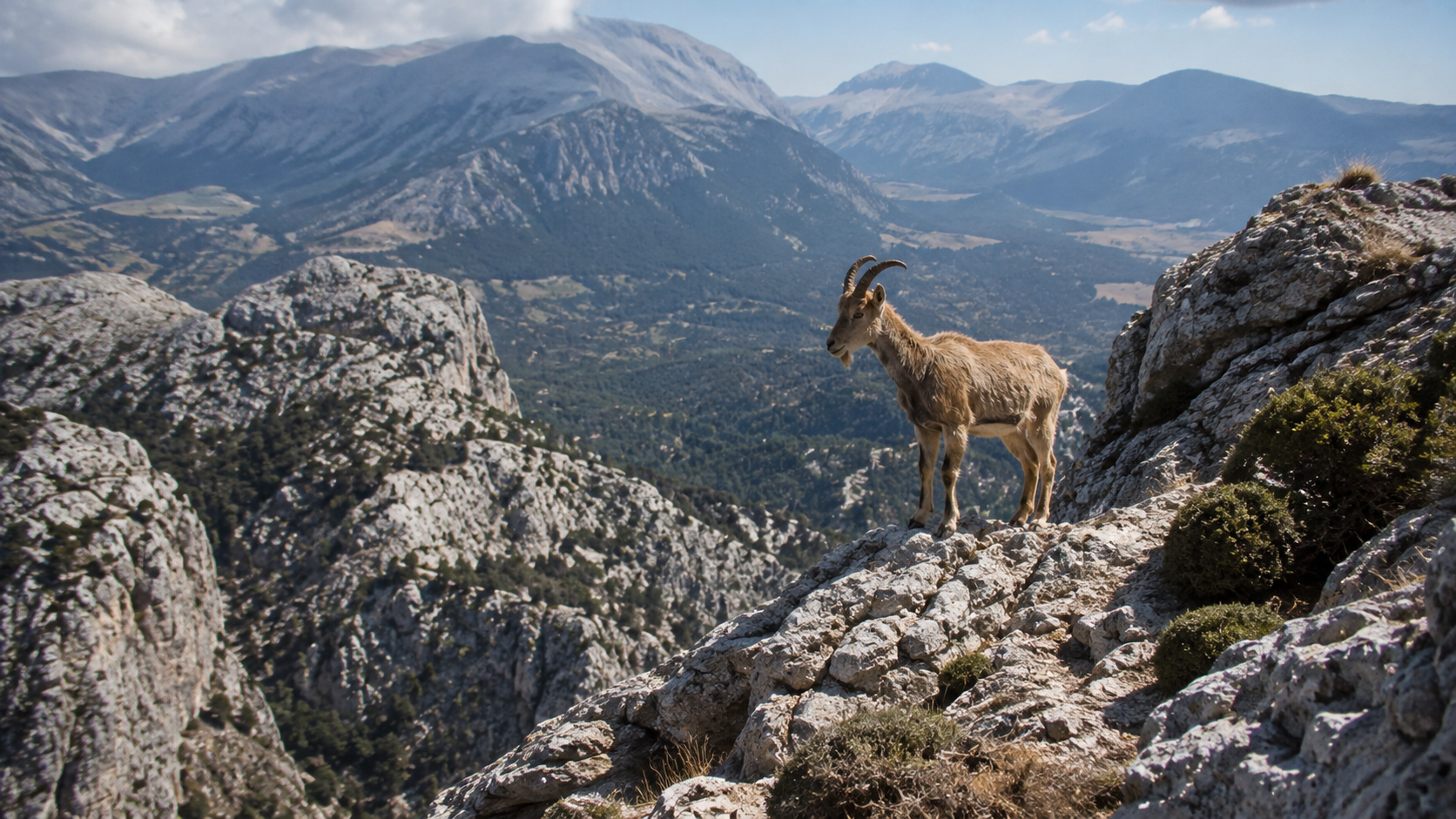
Samaria is known as a hiking route, but the reason the area is protected is a far broader mountain ecosystem: dozens of species of mammals, reptiles, amphibians, and around 200 bird species.
The Cretan wild goat, or kri-kri (Capra aegagrus cretica), favours steep, rocky slopes with gradients above 30%. Genetic studies link it closely to goats brought to Crete by the earliest Neolithic settlers.
The bearded vulture, among Europe's rarest large raptors, feeds mainly on bone. The White Mountains host critical breeding populations of the species in Greece — proper observation means watching from a distance, without approaching breeding sites.
Rethymno — Psiloritis: a 298-million-year-old mountain
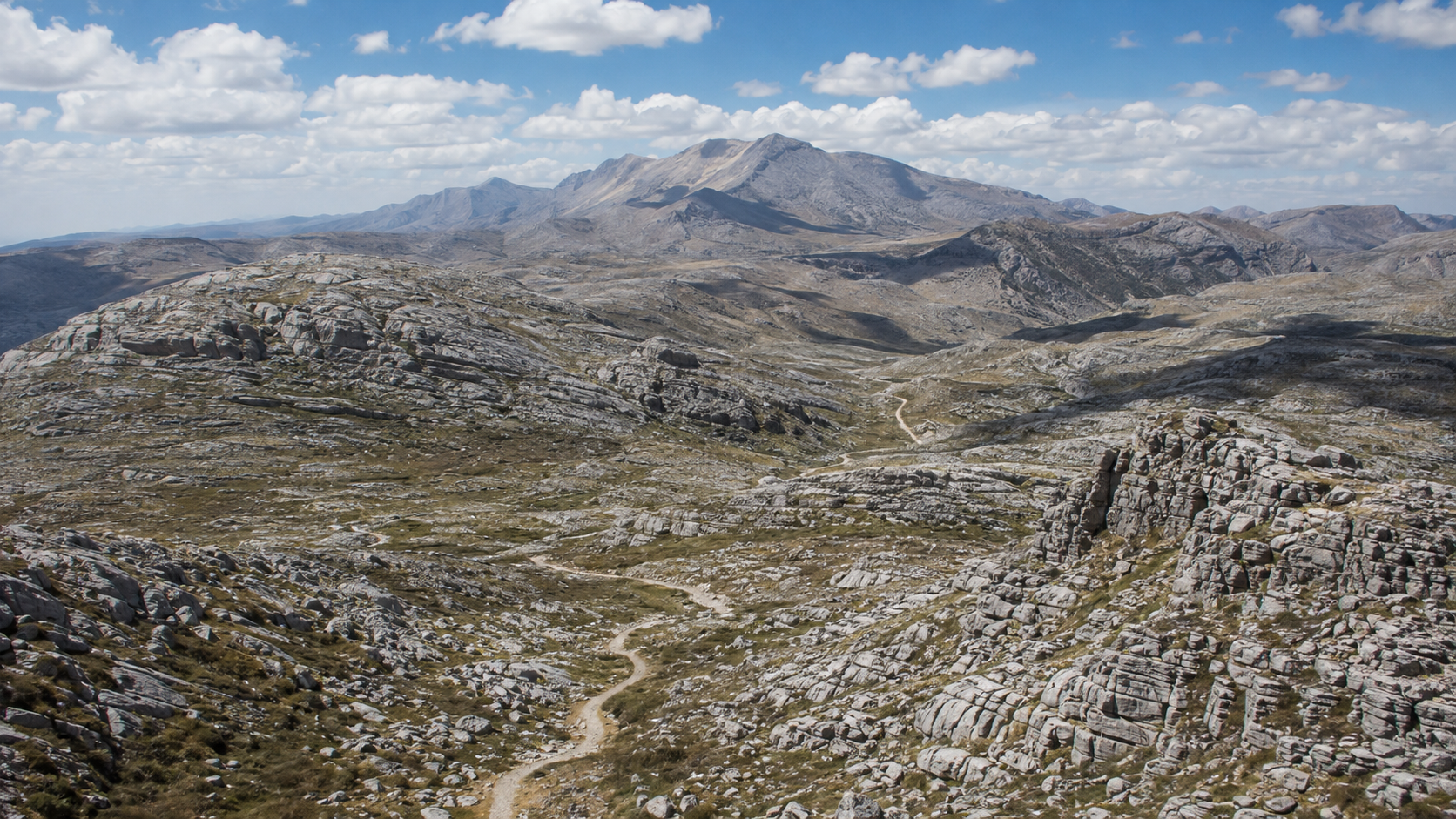
The Psiloritis UNESCO Global Geopark preserves an almost continuous sequence of rock formations from the Permian period, roughly 298 million years ago, to the present. The gorges, folds, caves, and plateaus are the result of the same tectonic history that continues to lift Crete.
Crete sits on the boundary where the African and Eurasian plates interact — at the open-air "Museum of Folds" at Vossakos you can see rock deformations used as real examples in geological education.
Limestone slowly dissolves in water and forms karst systems: sinkholes, swallow holes, and hundreds of caves, including one vertical cave over 950 metres deep. Sfendoni, Melidoni, and the Idaean Cave each show a different side of the same story: geology, human use, and worship.
Heraklion — Asterousia: Europe's southern edge
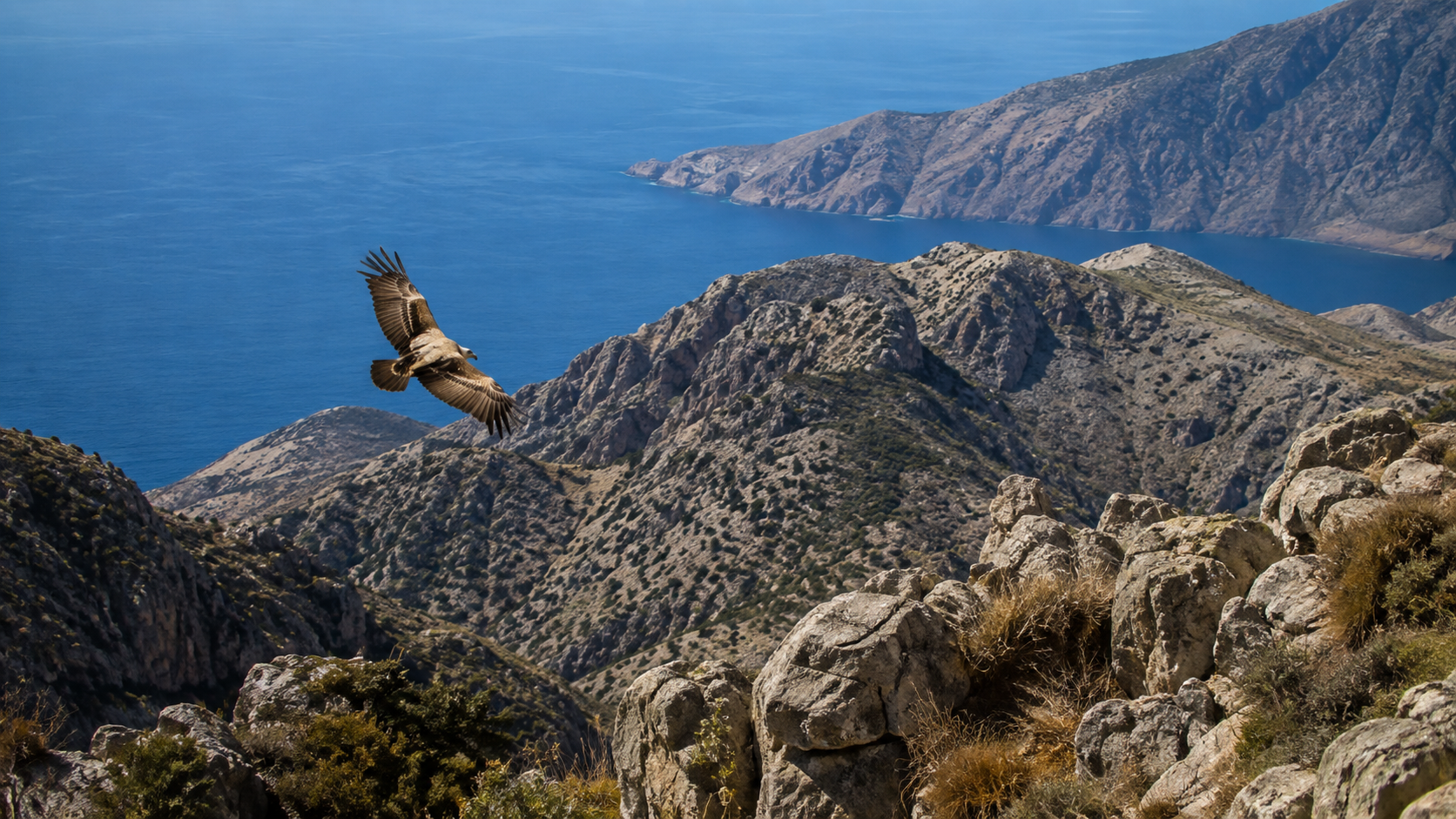
The Asterousia range joined UNESCO's Biosphere Reserve network in 2020 — the area holds roughly half of all the animal and plant species recorded across the whole of Crete.
Above Kofinas, bearded vultures, griffon vultures, golden eagles, and Bonelli's eagles can appear — good binoculars and distance are more useful than getting close.
A large part of the Biosphere Reserve is marine: the steep gorges drop down to the Libyan Sea, forming a single system of land and coastal habitats.
Lasithi — Sitia: Crete as a geological archive
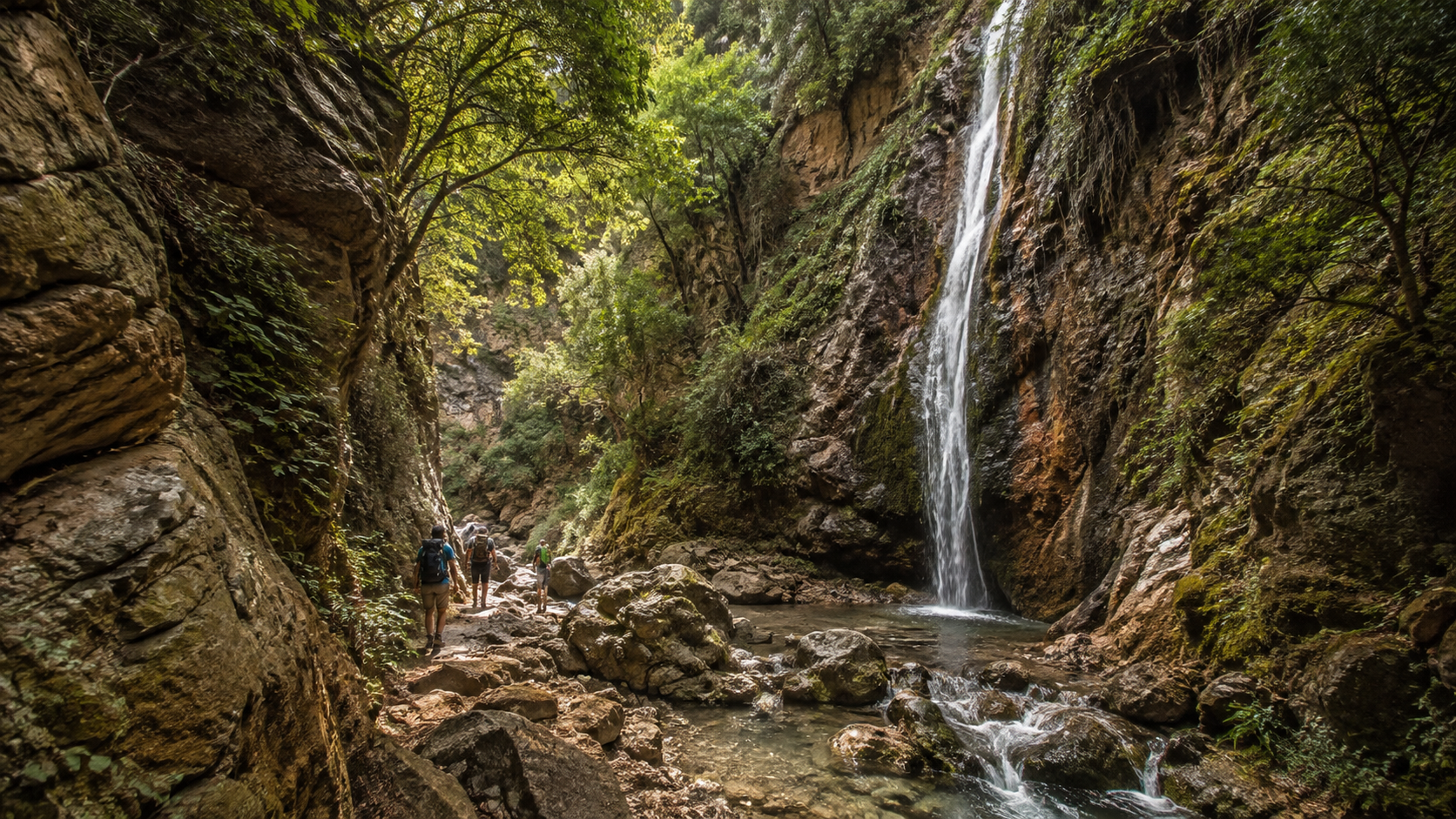
The Sitia Geopark maps gorges, caves, faults, folds, springs, fossil-bearing sites, and dozens of organised geo-routes.
The Richtis gorge, known for its roughly 20-metre waterfall, formed within phyllites and quartzites around 360 million years old (Georoute 17, 5 km, from Exo Mouliana to the coast).
In the first gorge of Ano Zakros, fossilised rudist shells appear in limestone from the Cretaceous period, roughly 70 million years old.
Georoute 15 (3.3 km, Toplou gorge) combines endemic plants, fossils, seasonal pools, and tafoni rock formations, with a recorded presence of freshwater terrapins.
Observe without leaving a trace
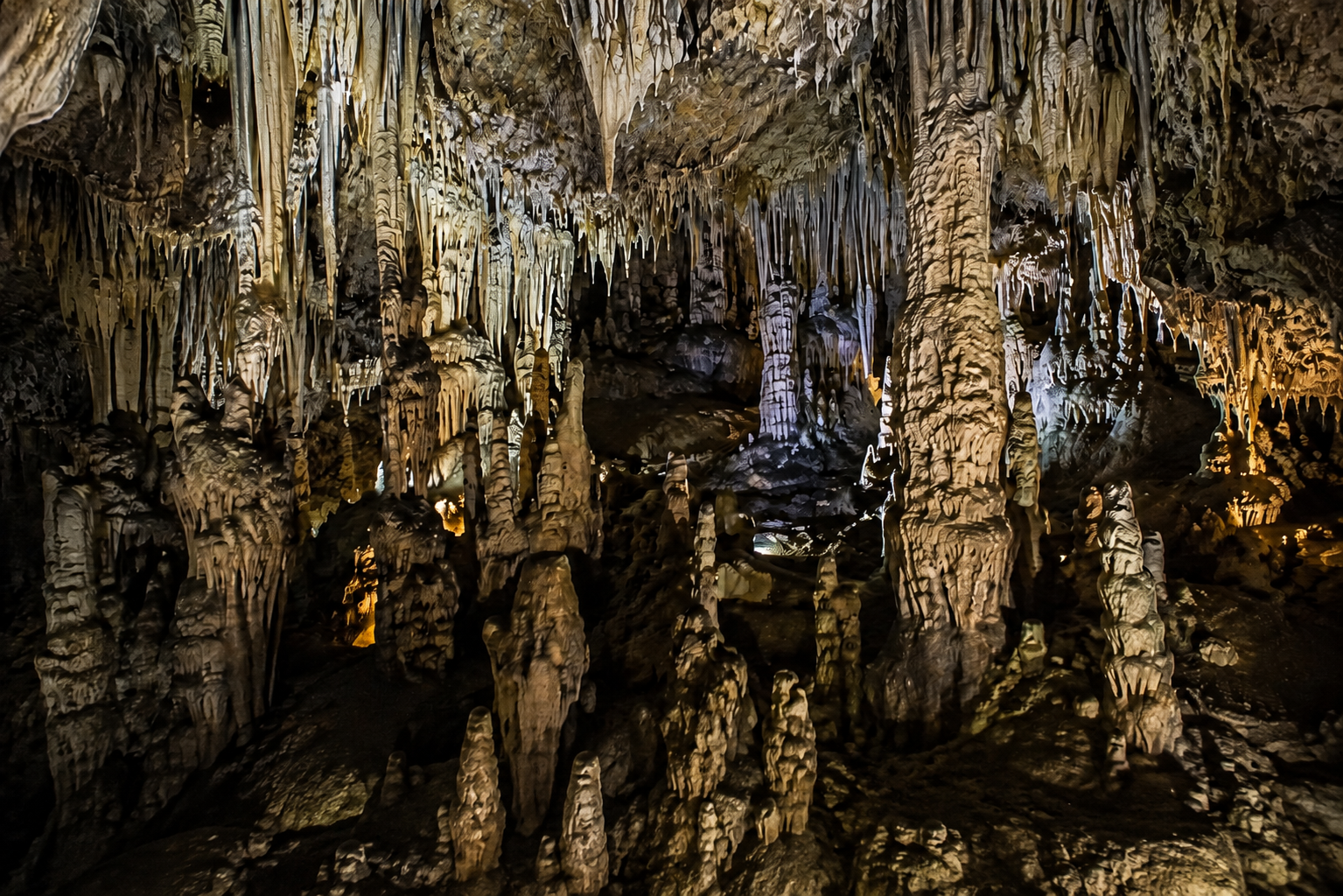
Raptor nests, rare plants, caves, and small wetlands are fragile systems. Don't publicly disclose exact nest locations, don't collect plants or fossils, and don't enter non-visitable caves without a permit and proper guidance.
Spring: wildflowers, endemic plants, green gorges — and still snow on the high peaks. Summer: a good period for caves and geology, with periodic restrictions in protected areas due to fire risk. Autumn–winter: migratory birds, and a genuine winter mountain at altitude.
Ταιριάζει αν
- You're interested in geology, wildlife, and protected ecosystems, not just the view.
- You're willing to observe from a distance, without approaching nests or sensitive habitats.
- You want to combine natural history museums with time in the field.
Ίσως όχι αν
- You want a guaranteed sighting of a specific species at a specific spot.
- You don't want to follow access rules in protected areas and caves.