
Summer · editorial guide
Crete: beyond Knossos
By The Tripsenti Team
Knossos is the image everyone knows. But the archaeology of Crete isn't a single story, and it doesn't end with the Minoans. From prehistoric settlement and Minoan palaces to the cities of the Geometric, Classical, and Hellenistic periods, Roman Gortyna, and the earliest Christian basilicas, the island holds layers of history stacked literally one on top of another. The interest begins once you connect the sites to each other.
Chania — Aptera and Lissos
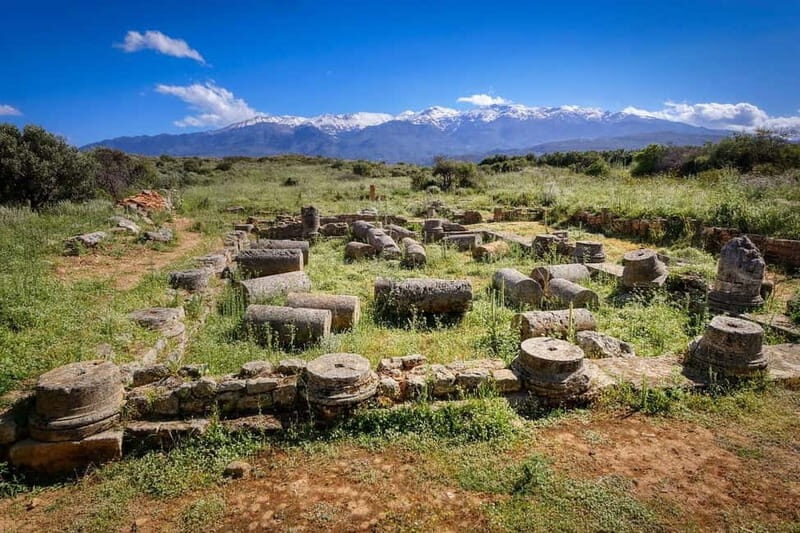
Aptera, above the bay of Souda, is explained first by its geography: from here, the natural harbour, the routes into the interior, and western Crete's maritime communication were all controlled. Beyond its photogenic Hellenistic theatre, the impressive Roman cisterns show the city's scale and the technical organisation of its water supply.
Lissos, on the southern coast of Chania, has an entirely different character — access is on foot from Sougia or by sea. Its Asklepieion links the site to healing cults and to a network of small cities in southern Crete.
Rethymno — Eleutherna: Crete after the palaces
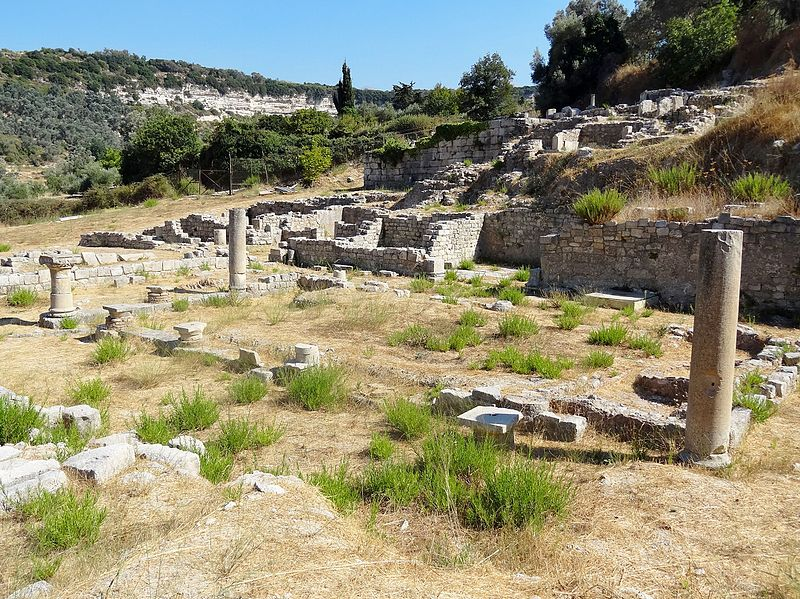
Eleutherna is perhaps the best choice for anyone who wants to move past the idea that Cretan archaeology is only Minoan. The city developed on the northwestern slopes of Psiloritis, and its finds span a huge stretch of time, from antiquity to the early Christian centuries.
Excavations at the Orthi Petra necropolis uncovered burial customs from the Geometric and Archaic periods that gave archaeologists rare points of comparison with the burial descriptions in the Homeric epics — which is why the Museum of Ancient Eleutherna uses the phrase "Homer in Crete."
Heraklion — Knossos is the beginning, not the whole story
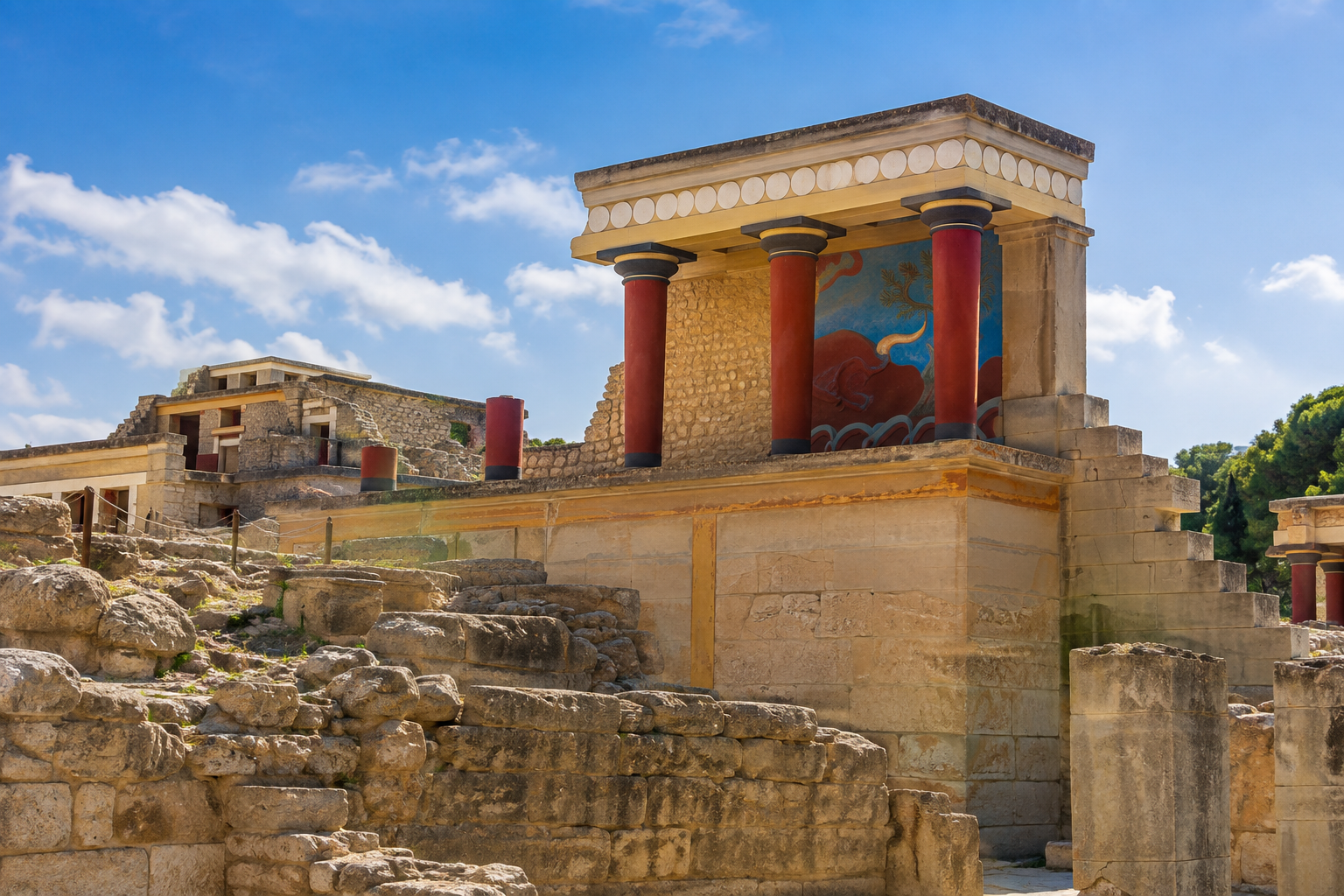
Today's image of the Knossos palace is largely tied to the interventions of Arthur Evans, who reconstructed parts of the complex using materials and interpretive reconstructions modern for his time. Knossos is at once a Minoan monument and a chapter in the history of 20th-century archaeology itself.
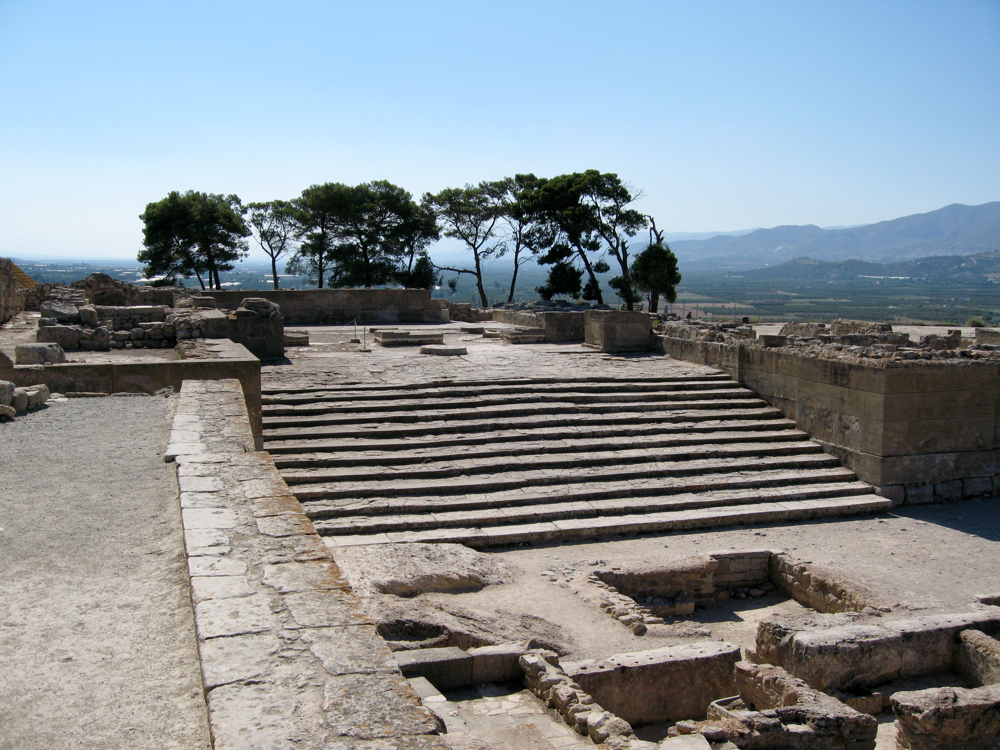
Phaistos sits above the Messara plain, with a visual link to Psiloritis and the productive land of southern Crete — the famous Phaistos Disc, whose script has never been decoded with certainty, comes from here.
Gortyna, one of Crete's most important cities in Roman times, holds the Great Inscription — the Gortyn Code, an extensive body of law written in a boustrophedon layout.
Lasithi — Zakros and Malia: two other ways to read the Minoan system
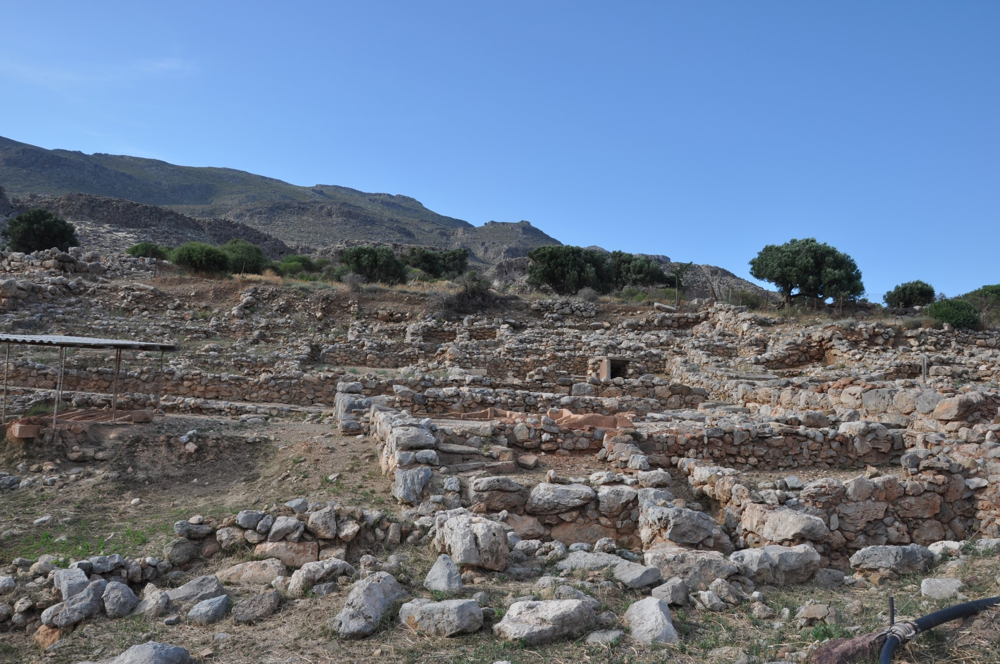
The Zakros palace wasn't systematically looted after its destruction, unlike other Minoan sites, which allowed archaeologists to find rich sets of objects still in place and reconstruct the function of specific spaces with far greater precision — among them the famous rhyton carved with a scene of an open-air sanctuary, now in the Heraklion Archaeological Museum.
Malia, less well known than Knossos, has revealed not just the palace but parts of the town, workshops, and residential zones — ideal for anyone who wants to understand the everyday life of a Minoan community.
The Heraklion Archaeological Museum
It isn't a supplement to Knossos — it's the place where most of the stories you see scattered across the island come together. Its collections span roughly seven millennia, and its Minoan collection is considered the most important in the world: the Snake Goddesses, the Bull-Leaper, the bull's-head rhyton, the gold bee pendant from Malia, the Phaistos Disc, and Linear B tablets from Knossos.
If you're planning an archaeological trip, it makes sense to visit either at the start, to gain context, or at the end, to connect the objects with the sites you've seen.
If you only have three days for archaeology
Day 1: Knossos early in the morning and the Heraklion Archaeological Museum the same afternoon — the site and its objects together.
Day 2: Phaistos and Gortyna — two different centres of the same plain, from different historical eras.
Day 3: pick a character — Eleutherna for post-Minoan Crete, Zakros for a Minoan palace and its landscape, Aptera for a city and its geography.
Ταιριάζει αν
- You want to connect archaeological sites to each other, not just tick off landmarks.
- You're interested in the history of archaeology itself, not only the exhibits.
- You have at least 2–3 days dedicated purely to an archaeological trip.
Ίσως όχι αν
- You only want a quick visit to Knossos with no further context.
- You're travelling at peak summer and can't handle exposed sites without shade at midday.